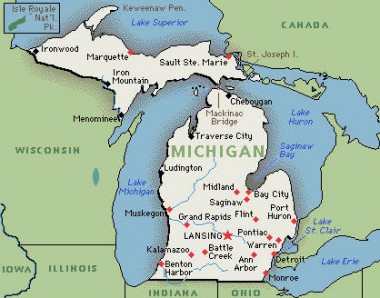
Cambridge, MA, December 10, 2020 – Medical payments per claim with more than seven days of lost time were fairly stable in Michigan, increasing 2.5 percent per year on average, according to a recent study by the Workers Compensation Research Institute (WCRI).
Overall stable trends in nonhospital payments per claim in Michigan mask some variation among key nonhospital services. Payments per claim increased for physical medicine services and “other services,” which mainly includes anesthesia, drugs, legal and special reports, supplies and equipment, miscellaneous services billed by stand-alone ambulatory surgery centers (ASCs), and other miscellaneous defined medical and/or diagnostic services and testing. On the other hand, payments per claim have decreased since 2013 for radiology (both major and minor radiology) and neurological testing. Payments per claim were stable for other key nonhospital services.
“Michigan uses fee schedules, including professional services, which is tied, in large part, to the Medicare resource-based relative value scale (RBRVS),” said Ramona Tanabe, executive vice president and counsel of WCRI. “Hospital reimbursements, both for outpatient and inpatient services, are based on hospital-specific cost-to-charge ratios. Payments to ASCs or freestanding operating facilities are paid based on a per-procedure fixed-amount fee schedule, which sets rates at 130 percent of Medicare ASC rates.”
The study, CompScope™ Medical Benchmarks for Michigan, 21st Edition, compared Michigan with workers’ compensation systems in 17 other states. For the study, WCRI analyzed workers’ compensation claims with experience through 2019 for injuries up to and including 2018.
The following are among the study’s other findings:
- Among the study states, Michigan had among the lowest medical payments per claim with more than seven days of lost time at all claim maturities.
- Nonhospital payments per claim were 25 percent lower than the median study state for 2018/2019 claims, reflecting lower prices paid for professional services and typical utilization of nonhospital services.
- A larger proportion of workers received at least one service in a hospital setting than in most study states.
With many wondering what impact COVID-19 will have on state workers’ compensation systems, Tanabe says, “While the full impact is currently unclear, the CompScope™ studies will be a useful baseline to monitor the effects.”
To learn more about this study or to purchase a copy, visit https://www.wcrinet.org/reports/compscope-medical-benchmarks-for-michigan-21st-edition. The report was authored by William Monnin-Browder.
The Cambridge-based WCRI is recognized as a leader in providing high-quality, objective information about public policy issues involving workers' compensation systems.
About WCRI
The Workers Compensation Research Institute (WCRI) is an independent, not-for-profit research organization based in Cambridge, MA. Organized in late 1983, the Institute does not take positions on the issues it researches; rather, it provides information obtained through studies and data collection efforts, which conform to recognized scientific methods. Objectivity is further ensured through rigorous, unbiased peer review procedures. WCRI's diverse membership includes employers; insurers; governmental entities; managed care companies; health care providers; insurance regulators; state labor organizations; and state administrative agencies in the U.S., Canada, Australia, and New Zealand.
###